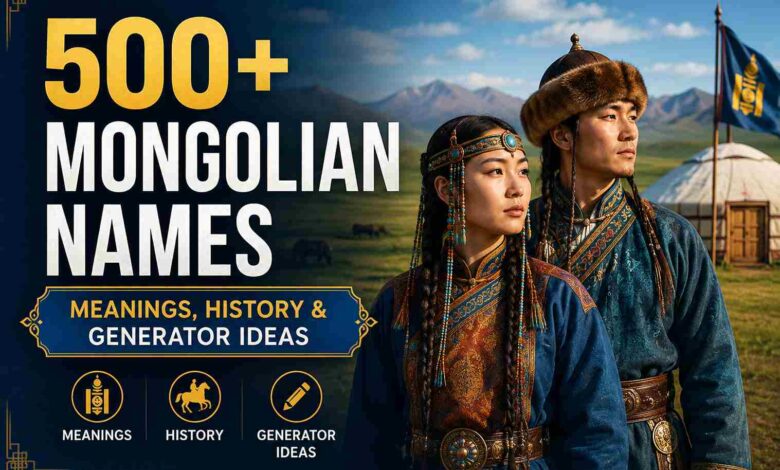
Mongolian names carry weight. They aren’t picked for how they sound alone — each one is built to say something about the child’s fate, character, or the world they were born into. Rooted in the era of Genghis Khan and the wide-open steppe that shaped Mongolian identity, these names lean on nature, strength, peace, and fortune as their core themes. Whether you’re naming a character, researching heritage, building a fantasy world, or just love the sound of these words, this is a full guide to Mongolian names — how they’re built, what they mean, where they come from, and hundreds of real examples organized by category.
A Quick History of Mongolian Naming
Long before Mongolia had a written naming registry, names were passed down orally, shaped by nomadic life, shamanistic belief, and the rhythms of the steppe. The 13th century — the age of Genghis Khan and the unification of the Mongol tribes — left the deepest mark on the naming tradition still in use today. Names from that era celebrated toughness, leadership, and the natural forces nomadic life depended on: sky, sun, iron, horses, and open land.
Later centuries brought new layers. Tibetan Buddhism spread across Mongolia starting in the 16th and 17th centuries, and with it came a wave of names borrowed or adapted from Tibetan and Sanskrit roots — words tied to enlightenment, blessing, and spiritual protection. Then came the 20th century and the socialist period, when naming trends shifted again toward simpler, more secular sounding names. Today, all three layers — ancient warrior names, Buddhist-influenced spiritual names, and modern simplified names — exist side by side, which is part of why Mongolian naming culture feels so varied.
How Mongolian Names Actually Work
Most Mongolian given names aren’t single words pulled from a list — they’re compounds. Two nouns or adjectives are fused into one word, and together they’re meant to describe a quality the parents hope the child will carry through life. “Munkh” (eternal) paired with “Erdene” (jewel) becomes Munkh-Erdene — an eternal jewel. “Altan” (golden) paired with “Gerel” (light) becomes Altangerel — golden light.
This compounding is the backbone of the whole naming system. Once you know a handful of root words — Munkh (eternal), Erdene (jewel), Bat (strong), Bayar (joy), Enkh (peace), Sarnai (rose), Naran (sun), Temur (iron) — you can start recognizing the meaning behind almost any Mongolian name you come across, even ones not on this list.
There’s also a darker, more protective tradition behind some older names. In parts of Mongolian folk belief, a name could be used to trick evil spirits into leaving a child alone. If an earlier child in the family had died, parents sometimes gave the next child a name meant to make them seem unworthy of a spirit’s attention — names translating to things like “not a person” or “not this one,” or even naming a son with a name typically given to daughters, simply to throw bad luck off the scent. It’s a reminder that naming in Mongolian culture was never just decorative — it was protective, spiritual, and deeply intentional.
Surnames work differently too. Traditional Mongolian naming uses a patronymic system — a person’s “surname” is really their father’s given name, not a fixed family name passed down for generations the way it works in most Western naming systems. That’s part of why most Mongolian name lists (including this one) focus purely on given names: patronymics shift with every generation, so they don’t behave like a static surname list at all. It’s only in the last century, largely for administrative and passport purposes, that fixed clan names have made a partial comeback.
Why Mongolian Naming Traditions Matter
Names in Mongolia tie back to more than just the sound of a word — they connect to clan identity, family heritage, and a cultural memory that stretches back to the Mongol Empire. Many names still in use today either belonged to or echo historical figures — khans, warriors, princesses — while others are drawn straight from the natural world: mountains, sun, iron, wild horses. Some carry Buddhist spiritual weight, others are pure folk protection charms. Choosing one isn’t a cosmetic decision; it’s a small act of carrying that history forward.
Ancient & Historical Names
Names tied to the empire-building era and its ruling families:
Temüjin, Yesügei, Khasar, Tolui, Batu, Subutai, Jelme, Bo’orchu, Khutulun, Sorghaghtani, Möngke, Güyük, Kaidu, Chagatai, Börte, Duwa, Toghrul, Bodonchar, Hulagu, Ogedei, Esuge, Arigh
Medieval Names
Names from the height of the Mongol Empire’s expansion across Asia and beyond:
Chormaqan, Dayan, Esun, Ilkhan, Jochi, Neguder, Qutulun, Tarmashirin, Toqta, Urung, Zereg, Kublai, Guyuk, Batu, Sorghaghtani, Kaidu
Female Names
Altantsetseg, Bolormaa, Enkhjargal, Gerelmaa, Khulan, Munkhtuya, Narantsetseg, Oyuuntsetseg, Sarnai, Tungalag, Uranchimeg, Yanjmaa, Zolzaya, Anudari, Bayarmaa, Delgermaa, Erdenetuya, Khishigjargal, Maralmaa, Solongo, Ariunaa, Bilegmaa, Chimgee, Enkhtuul, Ganzaya, Khaliunaa, Munkhchimeg, Narantuya, Saruul, Undram
Male Names
Amar, Batsaikhan, Chuluunbaatar, Dashdorj, Erdenebold, Galsan, Khatanbaatar, Luvsandorj, Munkh-Erdene, Namsrai, Otgonbaatar, Purevjav, Sainbayar, Temurbat, Uugan, Yondon, Zundui, Erkhembat, Gankhuyag, Batmend, Batjargal, Ganzorig, Otgonjargal, Sodnom, Amartuvshin, Batgerel, Erdenejargal
Unisex Names
Root words simple and neutral enough to work across genders:
Ankh, Azjargal, Bayanzul, Chuluun, Enkh, Erdene, Gan, Jargal, Munkh, Nar, Ochir, Sain, Temur, Tsolmon, Zorig, Altai, Bileg, Khairaa, Ujin, Yalguun
Everyday & Popular Names
The names you’d actually run into in modern Mongolia — common, familiar, and still meaningful:
Baatar, Batbayar, Bat-Erdene, Boldbaatar, Chinbat, Enkhbayar, Ganbaatar, Gankhuyag, Munkhbat, Munkhzul, Nomin, Otgonbayar, Oyunchimeg, Purevdorj, Sukhbaatar, Tserendash, Uuganbayar, Zolboo, Bayarmaa, Delgersaikhan, Amarbayar, Bat-Erdene, Boldbaatar, Chinbat
Unique & Uncommon Names
Names that stand out from the everyday list, often longer compounds with more layered meanings:
Altangerel, Bayarjargal, Chimegtuul, Delgertuya, Erkhembayar, Ganchimeg, Khongorzul, Mandakh, Narangerel, Odgerel, Purevdorj, Sarantuya, Temurbaatar, Uurtsaikh, Yadamsuren, Zolboo, Ankhbayar, Batdelger, Erdenechimeg, Munkhsaikhan
Cool & Striking Names
Names with a harder, sharper sound — often favored for characters or stage names:
Arslan, Batzorig, Chingun, Darkhan, Erkhem, Hurd, Ireedui, Kharuul, Lkhagva, Mergen, Noyon, Orkhon, Rentsen, Suld, Taivan, Urtnaa, Zevgee, Munkh-Erdene, Khatanbaatar, Ganboldoo
Short Names
For something quicker on the tongue:
Anu, Bat, Bolor, Chin, Enkh, Gan, Jav, Khul, Nar, Och, Sai, Tem, Uug, Zol, Ari, Bay, Del, Erk, Tuul, Zaya, Lha, Monkh
Modern Names
Ariunbold, Bilegtuya, Chinguun, Davaajargal, Enkhjin, Ganchimeg, Khongorzul, Mandakhbayar, Narantuya, Oyunbileg, Purevjargal, Sarantuul, Temuulen, Undram, Zolzaya, Altantuul, Bayanzul, Erkhembayar, Munkhsaikhan, Yalguunzaya
Baby & Newborn Names
Names commonly given to infants, often chosen for the protective or hopeful meaning behind them:
Ariunzaya, Batdelger, Chimeddorj, Delgerzaya, Enkhsaruul, Ganzul, Khishigt, Lkhagvasuren, Munkhnaran, Naranzul, Otgonchimeg, Purevbat, Sarangerel, Temuujin, Uugantuya, Yalalt, Zoljargal, Ankhtsetseg, Bayartuya, Erdenejav
Famous & Historical Figures
Names borrowed directly from Mongolia’s most well-known historical and modern figures:
Genghis, Kublai, Ogedei, Zanabazar, Sükhbaatar, Choibalsan, Elbegdorj, Enkhbat, Ganbold, Batmönkh, Erdenebat, Nyamdorj, Tumur, Purev, Bandi, Dash
Names for Horses
Horses hold a near-sacred place in Mongolian culture, and it shows in the naming traditions built specifically around them:
Aduuchin, Altanhoof, Bortechin, Chandmani, Dulaan, Ereen, Gantulga, Haliun, Jargaltai, Khuleg, Morinbayar, Noyonhoof, Orchlon, Saikhanmor, Temeen, Uurga, Zalaa, Bayankhuleg, Khurdan, Tengermor
Traditional Clan-Linked Surnames
Since fixed family surnames are a modern administrative addition rather than an old tradition, these are typically clan or lineage names used alongside a given name:
Batbold, Batsaikhan, Bayar, Chuluunbaatar, Dash, Dorj, Erdene, Gan, Jargal, Khishig, Lkhagva, Munkh, Namjil, Ochir, Purev, Sodnom, Tseren, Uugan, Yondon, Zundui
More Names A–Z
A wider spread of names covering the full alphabet range, useful if you’re browsing for something specific:
Altanshagai, Bayanmunkh, Chimedtseren, Dolgion, Enkhsaikhan, Gantuya, Hishigdorj, Ireedui, Javkhlan, Khairaa, Luvsanjamts, Munkhgerel, Narangerel, Odontuya, Pagma, Renchin, Sainjargal, Tserenjav, Uuganzaya, Zoltuya
Common Meanings Behind the Names
| Name | Meaning |
|---|---|
| Altangerel | Golden light |
| Baatar | Hero |
| Chuluun | Stone |
| Enkh | Peace |
| Ganbold | Steel strength |
| Khulan | Wild horse |
| Munkh | Eternal |
| Naran | Sun |
| Ochir | Diamond / thunderbolt |
| Saruul | Clear / bright |
| Temur | Iron |
| Tsolmon | Morning star |
| Zaya | Fate / destiny |
| Erdene | Jewel |
| Jargal | Happiness |
| Sain | Good |
| Zorig | Courage |
| Bayar | Joy / celebration |
| Sarnai | Rose |
| Delger | Abundant / flourishing |
| Bat | Strong / firm |
| Uugan | Native / firstborn |
| Nomin | Turquoise |
| Tuya | Ray of light |
| Gerel | Light |
How These Root Words Combine
Once the root words above become familiar, the compound structure starts to make a lot more sense:
- Munkh (eternal) + Erdene (jewel) → Munkh-Erdene — “eternal jewel”
- Altan (golden) + Gerel (light) → Altangerel — “golden light”
- Bat (strong) + Bayar (joy) → Batbayar — “strong joy”
- Naran (sun) + Tsetseg (flower) → Narantsetseg — “sun flower”
- Erdene (jewel) + Chimeg (ornament) → Erdenechimeg — “jeweled ornament”
- Delger (abundant) + Saikhan (beautiful) → Delgersaikhan — “flourishing beauty”
This is a useful trick if you’re trying to build your own name rather than pick one from a list — pair a quality (strength, peace, light, joy) with an object or blessing (jewel, flower, star, iron) and you’ll land on something that sounds authentically Mongolian.
check latest article [Snapjotz.com Review 2026: What This Site Actually Is (And Why So Many Reviews Disagree)]
Tips for Choosing a Mongolian Name
- Start with the meaning. Almost every Mongolian name maps to a real quality — nature, strength, peace, fortune. Know what you’re naming before you name it.
- Understand the compound structure. Two root words fused into one is the norm, not the exception. A name that doesn’t follow that pattern may not read as authentically Mongolian.
- Be mindful of historical weight. Names tied to Genghis Khan or the empire carry real cultural significance — use them with that context in mind.
- Check gender fit. Some names are strictly gendered; others (like Enkh or Zorig) work as unisex.
- Say it out loud. Mongolian names can be consonant-heavy for non-native speakers — pick something your intended audience can actually pronounce.
- Pick an era. Ancient/warrior-era, modern, or Tibetan-influenced spiritual names each carry a different tone — decide which fits before you dive into a list.
- Consider the patronymic gap. If you’re writing a character or building a family tree, remember that Mongolian “surnames” traditionally shift with the father’s given name rather than staying fixed across generations.
- Watch for regional spelling variants. Mongolian names are often transliterated differently depending on the source (Cyrillic Mongolian vs. Chinese Inner Mongolian vs. classical script), so don’t be surprised to see more than one spelling of the same name.
Using a Mongolian Name Generator
If you’re naming a character for a book, game, or worldbuilding project rather than a real child, a generator is usually the fastest way to get a feel for the sound and rhythm of Mongolian names before settling on one. Most generators pull from real root words and either return authentic historical names or newly compounded combinations that follow the same two-root pattern described above. A few practical tips when using one:
- Generate a batch, then filter by meaning rather than sound alone — the meaning is what makes the name feel authentic.
- Cross-check unfamiliar names against the root word list above to understand what they’re actually saying.
- If you’re naming multiple characters from the same family, keep the patronymic structure in mind rather than giving everyone an unrelated fixed surname.
- Mix eras deliberately — an ancient warrior name next to a modern one can read as inconsistent in fiction unless the age gap is intentional.
FAQ
What are the most common Mongolian names? Names like Bat-Erdene, Enkhbayar, Nomin, Munkhbat, and Altantsetseg are widely used and lean on themes of strength, peace, and good fortune.
Do Mongolians use family surnames? Traditionally, no — Mongolia uses a patronymic system where a person is identified by their father’s given name rather than an inherited family surname. Fixed clan surnames have made a partial, largely administrative comeback in more recent decades.
Are Mongolian names gender-specific? Most are, but a number of root words (like Enkh, meaning peace, or Zorig, meaning courage) are used across genders.
Are ancient names like Temüjin or Börte still used today? Yes — many historical names remain in circulation, often chosen specifically for their tie to Mongolia’s imperial history.
Why do some Mongolian names sound like they have negative meanings? It comes from an old folk belief that giving a child an unappealing name could protect them from evil spirits, especially if an earlier sibling had died. Names like “not a person” or “not this one” were meant to make the child seem uninteresting to bad luck.
What’s the difference between Mongolian and Inner Mongolian (Chinese) name spellings? Names from Mongolia are usually transliterated from Cyrillic Mongolian, while names from Inner Mongolia (part of China) are often transliterated through Mandarin conventions first. This can produce noticeably different spellings for what is essentially the same name.
Are Buddhist or Tibetan-influenced names still common? Yes — since the spread of Tibetan Buddhism through Mongolia, many names carry Sanskrit or Tibetan roots tied to blessings, enlightenment, or protection, and these are still given today alongside more traditional Mongolian compounds.
Final Thoughts
Mongolian names hold onto something a lot of modern naming trends have drifted away from: intention. Every one is built to mean something — strength, peace, protection, fate — and many still echo the empire, the steppe, and the figures who shaped Mongolian history. Whether you’re naming a child, a character, or just exploring the culture, a Mongolian name is never just a sound. It’s a small piece of a much bigger story.