If you’ve ever seen someone wear a small coquí frog charm, a flag with a single white star, or a red hibiscus-looking flower on a keychain, you’ve already run into Puerto Rican symbols without maybe realizing it. Puerto Rico packs an outsized amount of identity into a small island, and its symbols — official and unofficial — tell that story in shorthand: Taíno roots, Spanish colonial history, African heritage, and a modern relationship with the United States, all layered together.
Here’s a full rundown of the symbols that actually represent Puerto Rico, what they mean, and why locals (and the diaspora) hold onto them so tightly.
Official Symbols of Puerto Rico
| Symbol | What it is | Adopted |
|---|---|---|
| Flag | Red, white, and blue with a single star | 1952 (official use) |
| Seal / Coat of Arms | Lamb on a Bible, castles and lions | 1976 |
| Anthem | “La Borinqueña” | 1977 |
| Flower | Flor de Maga | 2019 |
| Tree | Ceiba (silk-cotton tree) | De facto |
| Amphibian | Coquí | De facto |
| Bird | Puerto Rican Amazon (Iguaca) | De facto |
| Mammal | Manatee | 2011 |
| Beverage | Piña Colada | 1978 |
| Motto | Joannes Est Nomen Ejus (“John is his name,” referring to St. John the Baptist) | 1905 |
| Nickname | Isla del Encanto (“Island of Enchantment”) | De facto |
The Puerto Rican Flag
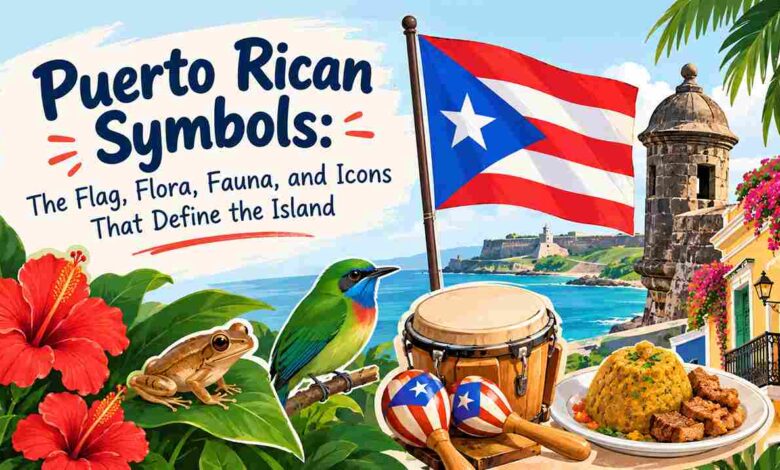
The flag is the most recognizable symbol by far: five horizontal stripes (three red, two white) with a blue triangle on the left holding a single white star. The star represents the island itself; the triangle nods to the three branches of government; the red stripes symbolize the blood of patriots, and the white stripes stand for individual liberty and the rights of man.
It was actually designed in 1895 by exiled Puerto Rican nationalists in New York, modeled closely on the Cuban flag as a symbol of shared independence movements — but with the colors reversed. It wasn’t legally adopted until 1952, when Puerto Rico became a U.S. commonwealth.
La Borinqueña (The Anthem)
“La Borinqueña” takes its name from Borinquén, the Taíno name for the island before Spanish colonization. The melody dates to the 1860s, but the lyrics have two versions — a revolutionary version tied to the failed 1868 independence uprising (Grito de Lares), and a gentler, official version adopted for government use in 1977. Locals sometimes sing the original, more defiant lyrics at cultural or political events instead of the official ones.
The Coquí Frog
The coquí is a tiny native tree frog, and it might be the most emotionally loaded symbol on this list. It’s named after the two-note “co-quí” chirp it makes at night — a sound so tied to island identity that Puerto Ricans living elsewhere often say they miss it more than almost anything. The phrase “de aquí como el coquí” (“from here, like the coquí”) is a common way to claim island-born identity, since the coquí famously can’t survive or reproduce outside Puerto Rico’s specific climate.
If island wildlife and nature symbolism interests you, [Latest Article] digs into a few more species that only exist in one specific place on Earth.
Flor de Maga (The National Flower)
Named the official flower in 2019, the flor de maga is a deep red, hibiscus-like bloom that’s often confused with true hibiscus but is actually a distinct, closely related species. It grows on the maga tree, native to Puerto Rico, and shows up constantly in folk art, embroidery, and tourism branding.
Taíno Symbols
Long before Spanish colonization, the Taíno people left behind symbols that Puerto Ricans still use today to signal indigenous heritage:
- The sun (Boinayel-style petroglyphs) — representing life and agriculture
- The cemí — a three-pointed stone figure believed to represent spirits or deities
- The coquí itself — which appears in Taíno folklore, not just modern branding
- Spiral and face petroglyphs — carved into rock throughout the island, especially at sites like Caguana
These symbols show up on jewelry, tattoos, and murals as a way of asserting that Puerto Rican identity didn’t start with colonization — it predates it by centuries.
The Jíbaro and the Pava
The jíbaro is the traditional rural farmer/countryman figure, similar to how “cowboy” carries cultural weight in parts of the U.S. The jíbaro is closely tied to the pava, a woven straw hat with a wide, flat brim, which has become a broader symbol of humility, hard work, and rural pride. You’ll see the pava used as a political symbol too — several Puerto Rican political parties use it in their logos.
Food as Symbol: Piña Colada and Mofongo
Puerto Rico claims the invention of the piña colada (a claim contested by a few Caribbean neighbors, but one Puerto Rico takes seriously enough that it’s an official symbol as of 1978). Beyond that, dishes like mofongo (mashed fried plantains) function as cultural shorthand the same way deep-dish pizza signals Chicago — you don’t need to explain what it means to someone from the island.
The Puerto Rican Parrot and the Manatee
The Puerto Rican Amazon, or iguaca, is critically endangered and serves as the de facto national bird — its call is distinctive enough that it gave the bird its name. The manatee, made official in 2011, represents the island’s coastal waters and ongoing conservation efforts, since manatee populations in Puerto Rico face real threats from boat traffic and habitat loss.
Modern and Diaspora Symbols
Beyond the historical and official list, a few newer symbols carry weight, especially among Puerto Ricans living in the mainland U.S.:
- The “Puerto Rico se levanta” phrase (“Puerto Rico rises”), which became a rallying cry after Hurricane Maria in 2017
- The black-and-white protest flag, a monochrome version of the national flag used during the 2019 political protests that led to a governor’s resignation
- Reggaetón and salsa imagery, which function as informal cultural symbols recognized globally, even by people with no other connection to the island
Frequently Asked Questions
What is the most important symbol of Puerto Rico?
There’s no single official answer, but the flag and the coquí frog are the two most universally recognized — the flag as the formal national symbol, and the coquí as the emotional, identity-driven one.
Why is the coquí frog such a big deal in Puerto Rican culture?
Because it’s found nowhere else on Earth and makes a sound so specific to the island’s ecosystem that it’s become shorthand for “home” among Puerto Ricans, especially those living abroad.
What does the star on the Puerto Rican flag mean?
The single white star represents the island of Puerto Rico itself, sitting inside a blue triangle that symbolizes the three branches of government.
Is the black-and-white Puerto Rican flag official?
No. It’s an unofficial protest variant that became widely used during the 2019 political demonstrations, symbolizing resistance and mourning rather than replacing the official flag.
What is a pava and why is it a symbol?
A pava is a traditional straw hat worn by rural farmworkers (jíbaros). It’s become a broader symbol of Puerto Rican humility, labor, and rural identity, and appears in several political party logos.
Conclusion
Puerto Rican symbols work on two levels at once: there’s the official list — flag, flower, bird, anthem — and then there’s the lived, emotional layer of symbols like the coquí, the pava, and even food, that carry just as much weight without needing a government decree. Together, they trace a straight line from Taíno roots through Spanish colonization to the modern diaspora, which is part of why they’re held onto so fiercely.