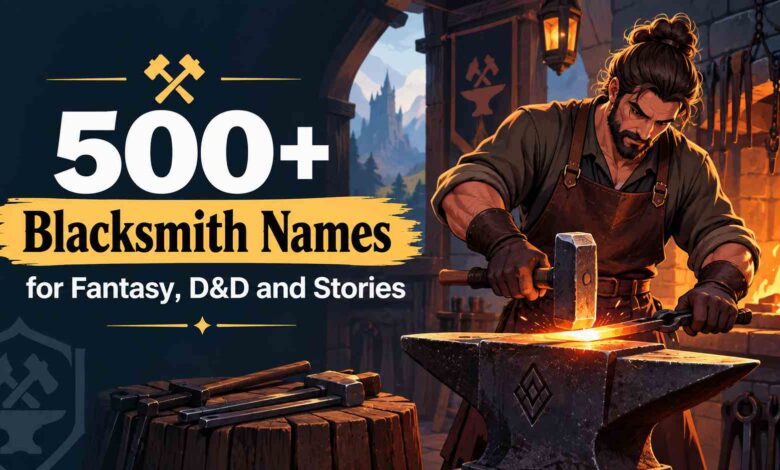
A great set of blacksmith names can turn a background character into someone players actually remember. Blacksmith names work best when they carry a sense of fire, iron, and hard-earned skill — the kind of name that sounds like it belongs to someone who has spent a lifetime at the anvil. Below you’ll find names organized by style and setting, along with guidance on how to pick (or build) one that fits your world.
Whether you’re naming an NPC for a tabletop campaign, a character in a novel, or a shopkeeper in a video game, this list covers realistic, fantastical, funny, and historical options so you don’t have to piece one together from scratch.
What Makes a Blacksmith Name Work
Before picking a name, it helps to know what separates a forgettable one from a memorable one. The strongest blacksmith names usually do at least one of these things:
- Reference the craft directly — words tied to iron, steel, coal, flame, or the hammer itself.
- Sound physically weighty — hard consonants (K, G, R, D) tend to read as “strong” to most ears.
- Fit the character’s origin — a dwarven smith, a human village blacksmith, and a half-orc weaponsmith shouldn’t sound interchangeable.
- Leave room for a story — a name like “Ashcarver” hints at a history without spelling it out.
You don’t need all four in a single name, but hitting even two of them usually beats a name picked at random.
Male Blacksmith Names
These lean traditional and work well for human or human-adjacent characters in most fantasy or historical settings.
- Aldous Ironmark
- Bevan Hearthstrike
- Corwin Flamewright
- Dietrich Stonebind
- Godfrey Ashwell
- Halvard Coalspine
- Ingram Steeltongue
- Jareth Hammerlash
- Leofric Blackember
- Marek Ironclad
- Osric Firetongue
- Petrik Hardwrought
- Quintan Grimforge
- Randel Steelbrace
- Sander Ashmantle
- Tobin Coalgrip
- Uther Ironclasp
- Wendel Flameborn
- Yorick Hardanvil
- Zale Steelwright
Female Blacksmith Names
Women blacksmiths appear more and more in modern fantasy fiction and gaming, and these names avoid leaning on male-coded surnames like “-son” or “-beard.”
- Adaira Steelweave
- Brenna Emberlight
- Corvina Ironthread
- Delyth Flameworn
- Eirwen Coalbright
- Freya Hardanvil
- Gwendolyn Ashclaw
- Isolde Firecrest
- Jonna Steelbind
- Kestrel Blackglow
- Lyanna Ironhold
- Maren Coalveil
- Odessa Flamespire
- Priya Steelroot
- Ravenna Ashmantle
- Selwyn Hearthiron
- Tamsin Firewrought
- Vesper Steelclasp
- Wynne Ironbright
- Yseult Coalfeather
Fantasy Blacksmith Names
For settings that go beyond typical medieval-Europe fantasy — magic-infused forges, alien metals, or otherworldly craftsmen — these lean more invented and exotic.
- Kaelthorne the Forgebound
- Xyveth Ironveil
- Nallith Starforged
- Voranq Ashcaller
- Ithren Moltensong
- Zephyrix Coalbane
- Draumir Steelspun
- Orikash the Emberweaver
- Sylvaneth Flamehollow
- Vaelric Ironomen
If you’re still building out the rest of your cast, [Latest Article] has a full rundown of naming conventions across different fantasy races that pairs well with a smith’s name from this list.
Dwarf Blacksmith Names
Dwarven smiths are a genre staple, and their names typically favor hard, compact syllables and clan-style surnames.
- Borgrim Ironback
- Dwalthar Stonehand
- Fendrick Coalbeard
- Grondar Steelfist
- Kaldrun Hammerhide
- Norbek Deepiron
- Rudmar Ashaxe
- Thurgold Blacktooth
- Ulvang Forgebreaker
- Vondrik Stoneclad
Medieval and Historical Blacksmith Names
For grounded, low-fantasy or historical fiction, simpler and more plausible names work better than anything overtly magical-sounding.
- Adam Smythe
- Cuthbert Fenwick
- Edmund Kettleworth
- Gilbert Farrow
- Hobbes Wainwright
- Lambert Cotter
- Percival Ashe
- Reginald Blackwell
- Silas Whitlock
- Walter Hobb
Note: Historically, “Smith” itself is one of the oldest occupational surnames in the English language, which is why so many real blacksmith-descended families still carry it today.
D&D and Tabletop RPG Blacksmith Names
These are built to feel at home in a campaign setting — distinctive enough to remember at the table, but not so strange that players stumble over pronunciation.
- Brakka Ironhide
- Dorn Emberfall
- Faelira Steelsong
- Grumnak Coalfist
- Isha Forgewhisper
- Korrath Ashbound
- Mira Hammerlight
- Ovrek Deepcoal
- Sennika Ironwake
- Torbin Flareanvil
Funny and Lighthearted Blacksmith Names
Good for comedic NPCs, parody settings, or a joke character in a home game where nobody’s taking things too seriously.
- Bent Nail Bertha
- Clunk McSmelt
- Ol’ Rusty Fingers
- Sparky the Unlucky
- Tongs McGee
- Ashy Pete
- Half-Hammer Harold
- Soot Face Sally
- Wonky Anvil Wilhelm
- Burnt-Thumb Bill
Blacksmith Shop and Guild Names
If your story needs the business to have a name, not just the person, these work as standalone shop signs or guild titles.
| Shop Name | Feel |
|---|---|
| The Glowing Ember | Cozy, small-town |
| Ironhold Forgeworks | Large-scale, industrial |
| The Cracked Anvil | Rustic, well-worn |
| Steel & Cinder | Modern fantasy |
| The Hammerfall Guild | Formal, organization-style |
| Ash & Iron Co. | Simple, brandable |
Blacksmith Names by Meaning
Some writers prefer to reverse-engineer a name from what it should say about the character. Here are a few root words commonly used in smith-themed names and what they tend to imply.
| Root or Element | Common Meaning | Example Name |
|---|---|---|
| Forge- | Creation, craftsmanship | Forgewright |
| Iron- | Toughness, reliability | Ironclad |
| Ember- | Warmth, quiet intensity | Emberlight |
| Ash- | Aftermath, endurance | Ashmantle |
| Steel- | Precision, resolve | Steelbind |
| Coal- | Origin, humble beginnings | Coalveil |
| Hammer- | Direct, blunt personality | Hammerlash |
Common Mistakes When Naming a Blacksmith Character
A few patterns show up often enough in amateur fiction and homebrew campaigns that they’re worth calling out directly:
- Overloading the name with craft words. “Ironhammer Steelforge” reads as a joke, not a serious character, because it stacks two smith-related words that already mean the same thing.
- Ignoring the setting’s naming logic. A dwarf with a name like “Xyleth Voidmancer” will feel out of place next to “Borin Stonebeard” unless there’s a story reason for it.
- Making the name too long to say out loud. If a name takes more than two seconds to pronounce at the table, players will shorten it themselves — better to do that work yourself first.
- Using a name that’s actively hard to spell. Fine for a one-off NPC, less fine for a recurring character players need to write down.
How to Build Your Own Blacksmith Name
If nothing on this list quite fits, you can build one in under a minute using a simple formula:
- Pick a first name that matches your setting’s culture (Norse-inspired, Old English, invented fantasy, etc.).
- Choose a craft-related root — forge, iron, steel, ash, coal, hammer, or ember.
- Add a suffix that implies action or trait — -wright, -bind, -born, -hand, -clad, -veil, -fist.
- Say it out loud. If it trips your tongue, swap one syllable.
That’s essentially how most of the names above were constructed, so feel free to mix and match roots from different sections of this list.
FAQ
What is a good blacksmith name for a fantasy character?
A good fantasy blacksmith name usually combines a craft-related root (iron, forge, steel, ember) with a suffix that suggests action or personality, like “-wright” or “-hand.” Names such as Ironclad or Forgewright work across most fantasy settings.
Are there real historical blacksmith surnames I can use?
Yes. Names like Smith, Smythe, Farrow, and Wainwright all trace back to metalworking or related trades in medieval England, and they work well for grounded historical or low-fantasy fiction.
Should a dwarf blacksmith have a different naming style than a human one?
Generally, yes. Dwarven names in most fantasy fiction lean on hard, compact syllables and clan-style surnames (Stonehand, Ironback), while human blacksmith names tend to be more varied and sometimes closer to real-world surnames.
Can I use a funny blacksmith name in a serious campaign?
It depends on the tone you’re going for. A lighthearted name can work well for a comic-relief NPC even in an otherwise serious game, but it will feel out of place for a character meant to carry real narrative weight.
How long should a blacksmith name be?
Short enough to say without stumbling — ideally one or two syllables for the first name and no more than three for the surname. Longer names are fine for background lore but get awkward in dialogue.
Final Thoughts
The right blacksmith name does a lot of quiet work: it signals the character’s origin, personality, and role before they’ve said a single line of dialogue. Whether you go with something grounded like Edmund Kettleworth or something fantastical like Kaelthorne the Forgebound, the names above should give you a solid starting point — or the raw material to build your own.